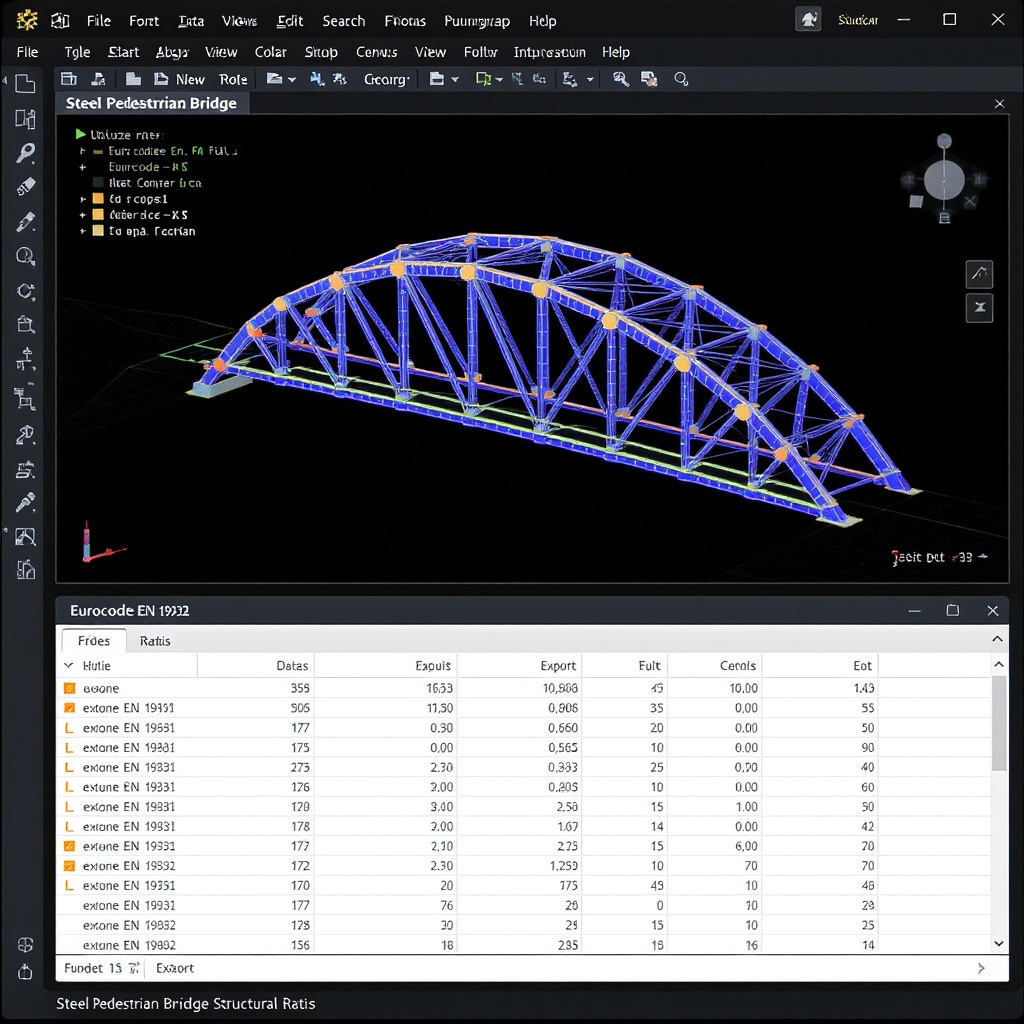
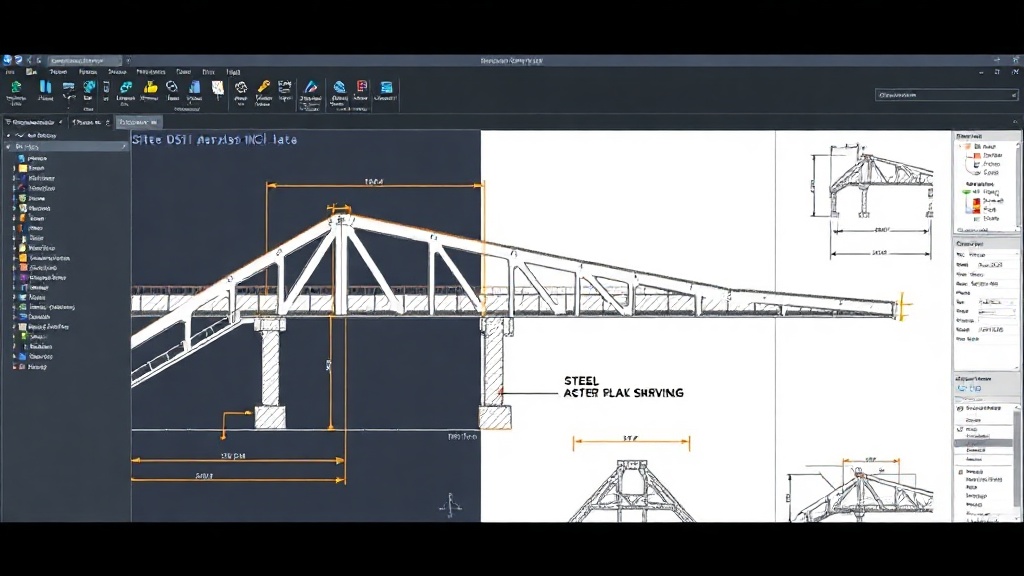
Bridge connection design and fabrication drawings, automated.
EN 1993-2 + national annexes. Upload a PDF bridge drawing — get a full member schedule,
bolted connection designs, DSTV NC1 CNC files, and IFC 4.3 for your BIM workflow.
No detailer required on repetitive bridge projects.
Scope note: Fatigue checks (EN 1993-1-9 baseline) and basic accidental actions are included.
Extended EN 1993-2 fatigue spectra and dynamic bearing design require engineer review — results are flagged automatically.
Standard connection and section-class checks are fully automated.
Typical workloads
The bridge projects where FrameAI saves the most time
High man-hour cost on connection detailing and DSTV generation is where the leverage is biggest.
Each revised PDF automatically re-runs all checks — no manual re-entry.
🚶
Pedestrian footbridges
Single/multi-span, truss or box girder. Full EN 1993-2 + vibration flag.
🛣️
Road overpasses
Plate girders, composite decks. EN 1994 composite beam checks.
🚆
Rail bridges
Fatigue Class 71 axle loads. EN 1993-1-9 fatigue checks auto-run.
🧩
Modular truss bridges
Repetitive part marks. DSTV NC1 batch export for full bridge fabrication run.
Every member gets a machine-readable DSTV NC1 file (7th edition) for CNC beam lines.
IFC 4.3 export carries member geometry, section class, and connection data —
ready to import into Tekla, Revit, or any ISO 16739 host.
DSTV NC1 per part mark — hole blocks, cutouts, weld prep, correct neutral-axis BO coordinates
IFC 4.3 IfcBeam / IfcColumn entities with material, grade, and utilization properties
Excel BOM — EN 10365 unit weights, surface area for painting, subtotals by section
DXF shop drawings — member plan, section cut, weld symbol schedule
PDF calculation report — full Eurocode working showing each check
Return on investment
Bridge projects — where detailing cost bites hardest
A typical 60m truss footbridge carries 400–600 man-hours of detailing and checking.
FrameAI eliminates the repetitive loop of PDF → model → check → drawing → revision.